
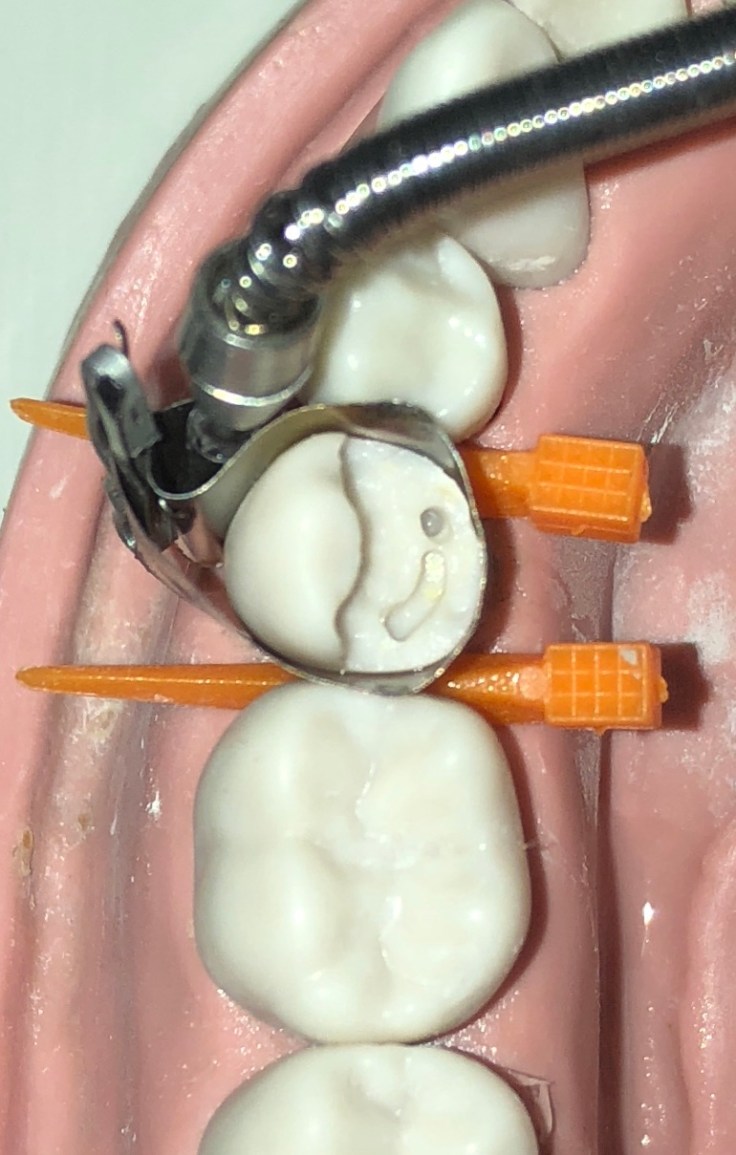
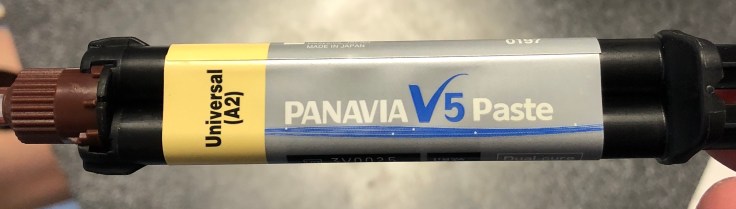
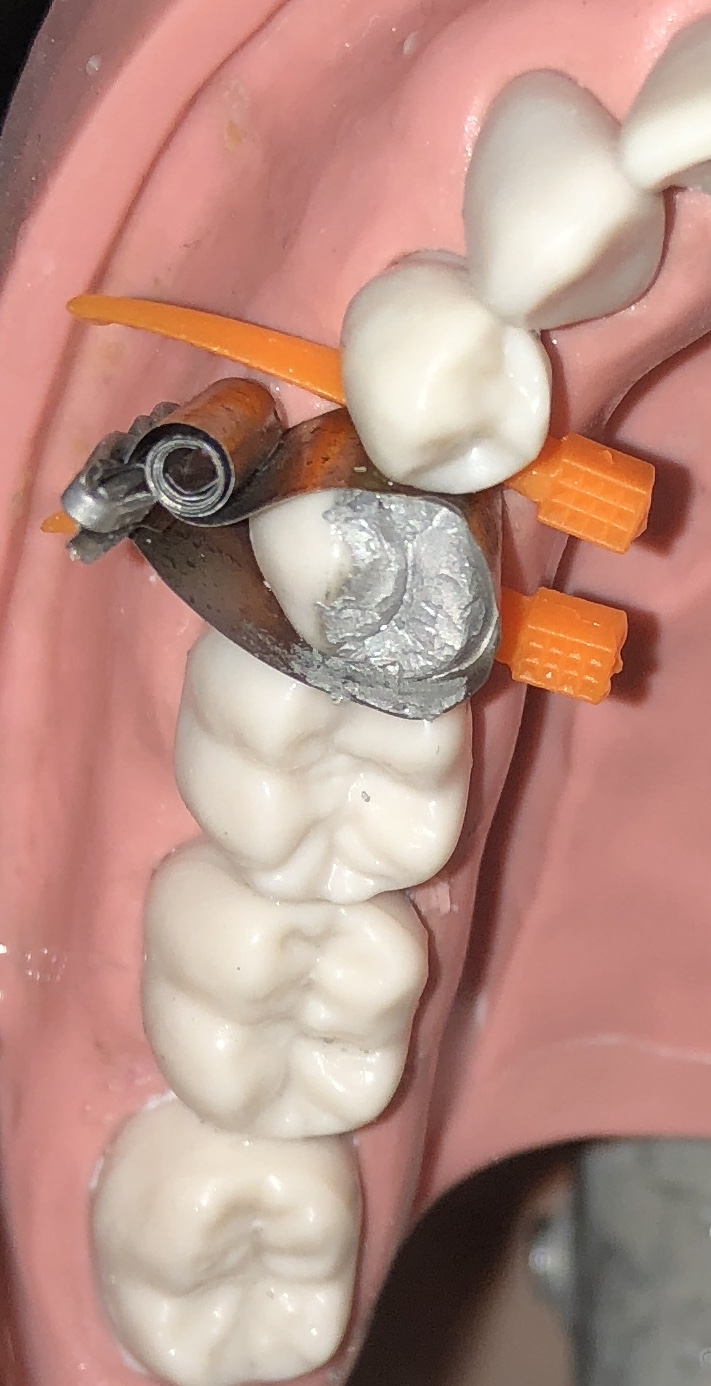
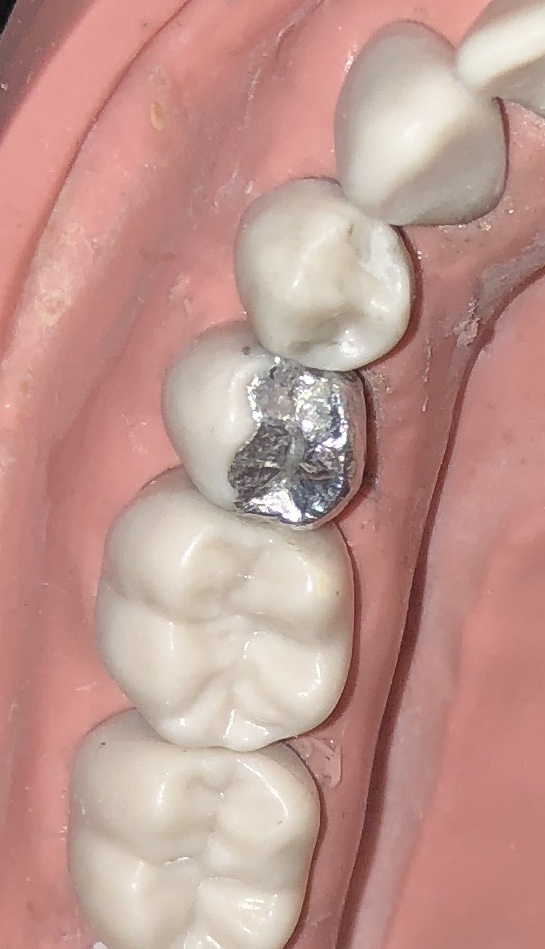
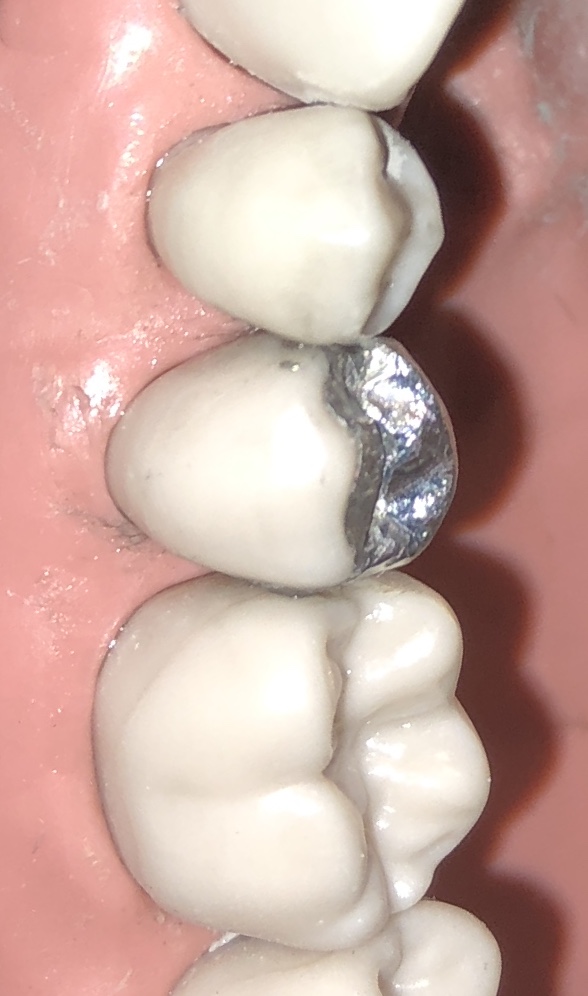
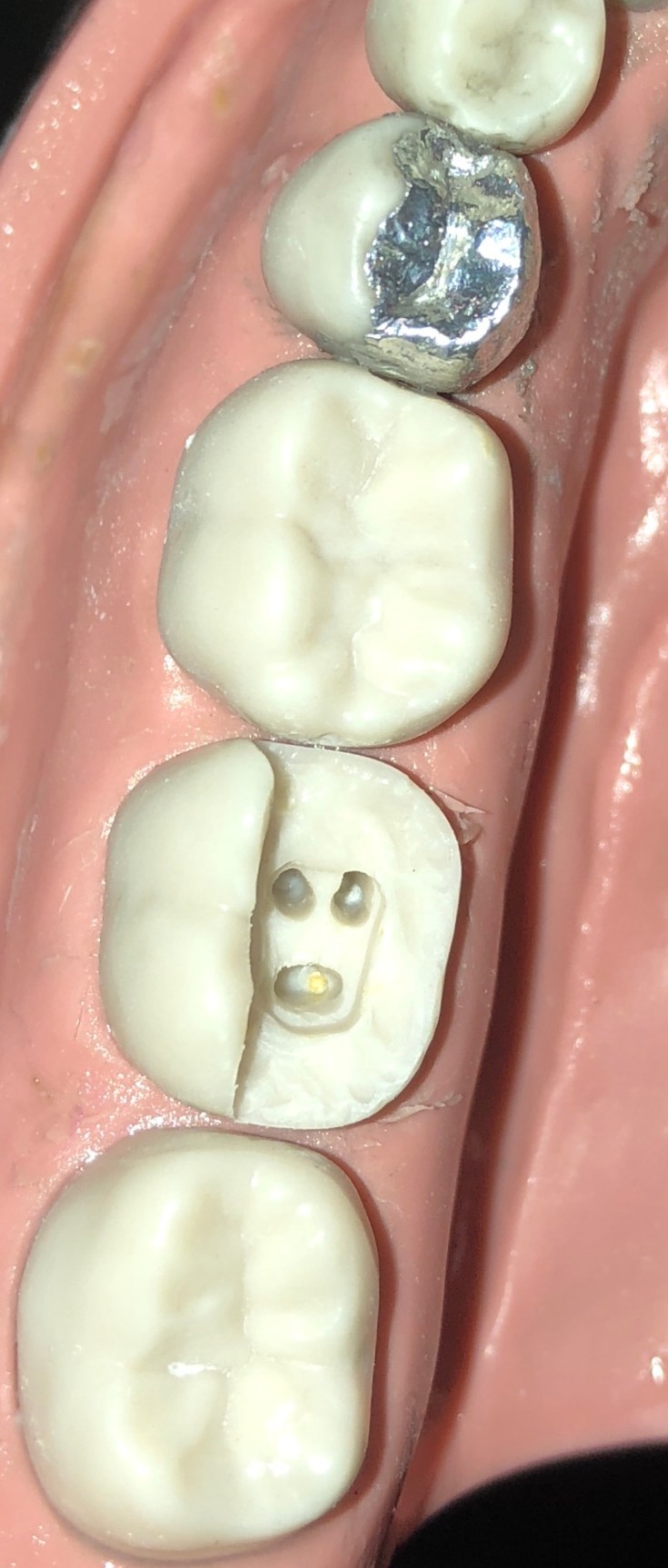
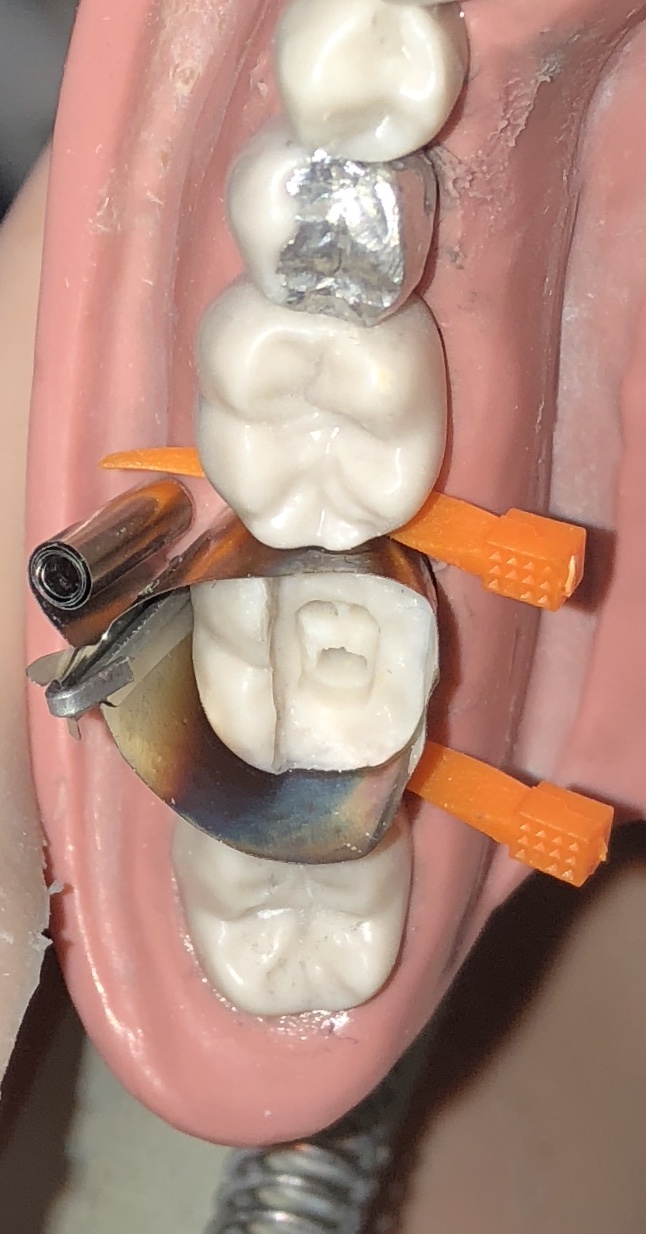
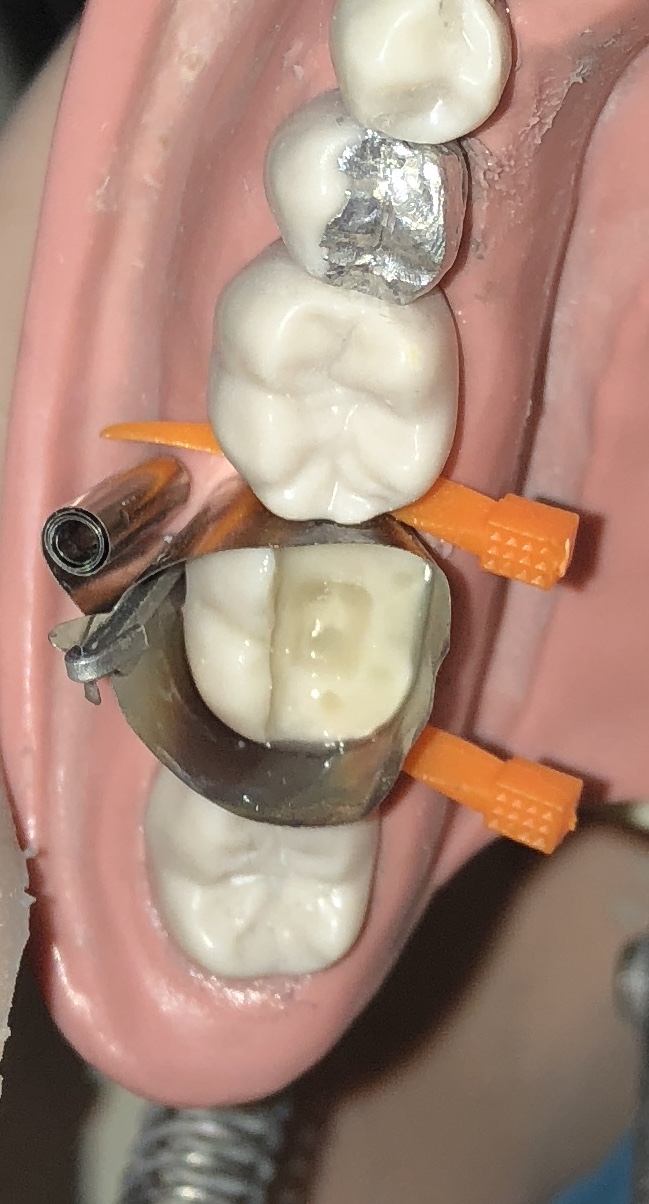
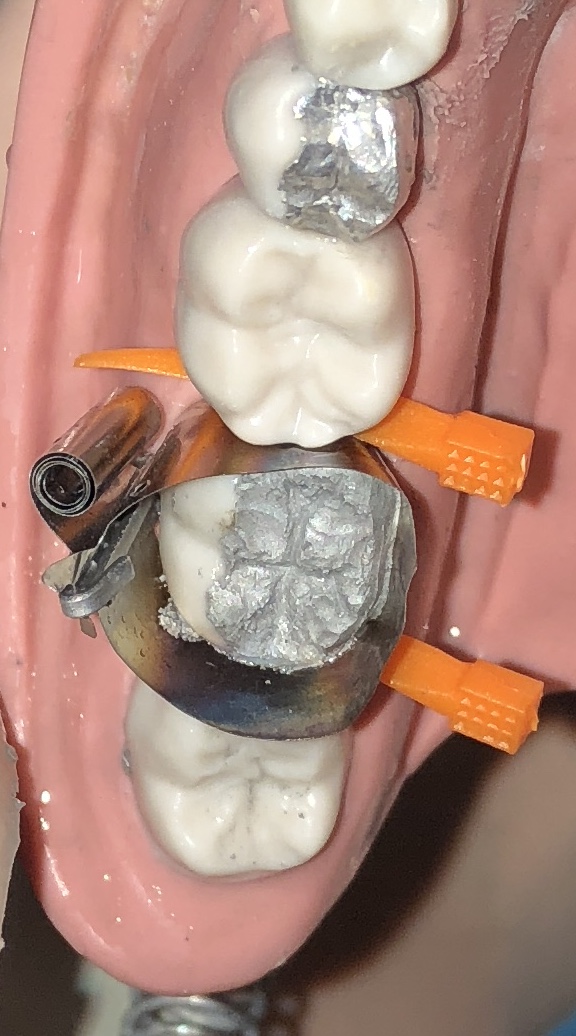
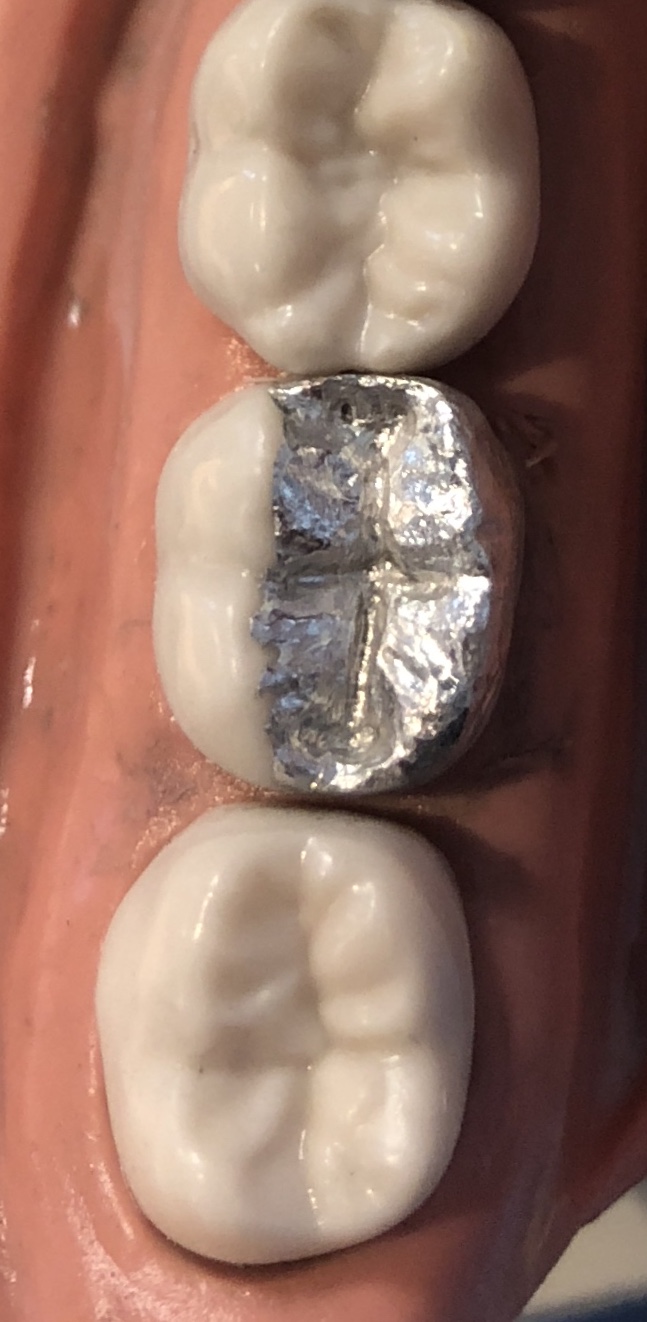
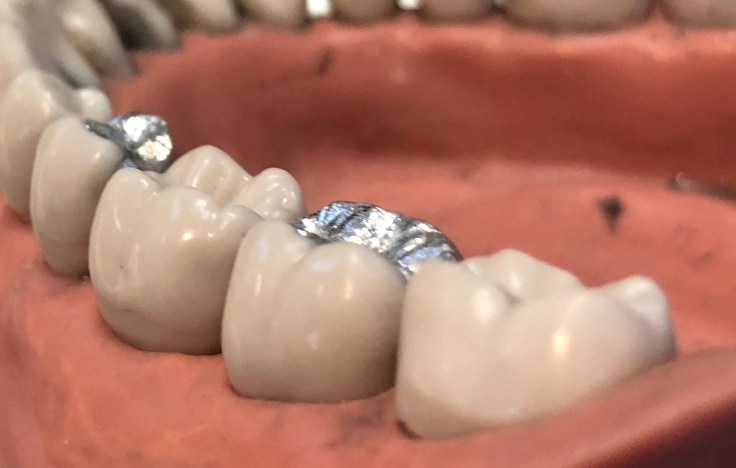
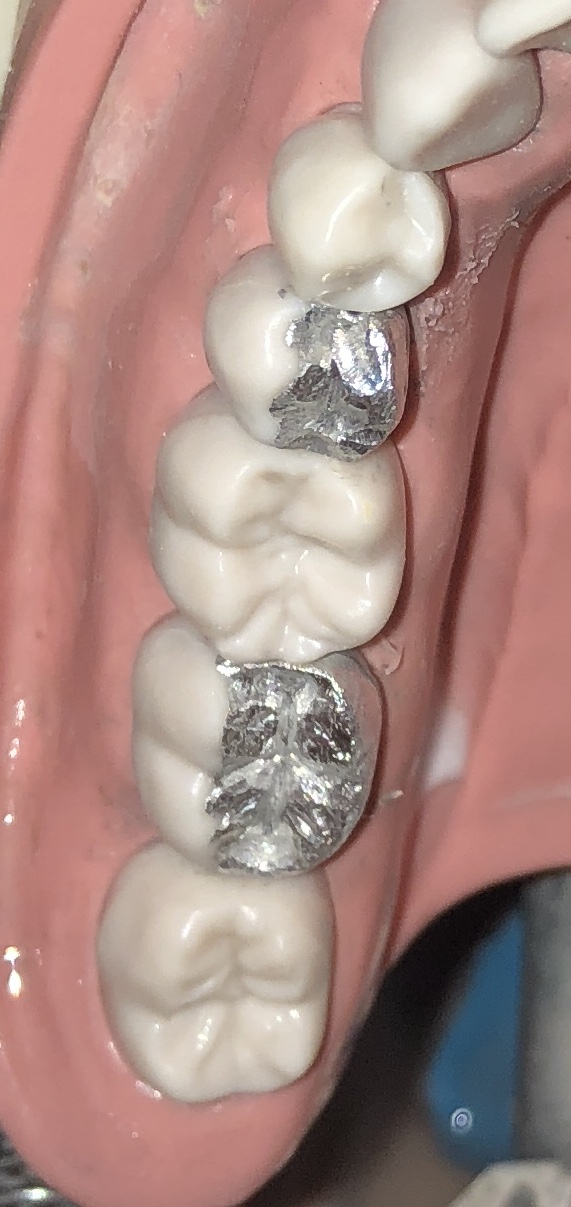
Module 5 of the Operative Dentistry course considered restoration of Endodontically treated teeth using bonded amalgam restorations. Teeth LL4 and LL7 were prepared with MODL cavities to simulate to extent of tooth tissue loss often encountered in root filled teeth. As amalgam does not bond to enamel or dentine it is important to incorporate appropriate resistance and retention form in cavity design. Grooves and amalgapin preparations were incorporated into the dentine of LL4 and a nayar core was planned in the LL7 to utilised the pulp space and coronal portion of the root canal system for retention. The cavities were isolated with an annealed automatrix which was adaptation marginally and secured with wedges from the lingual surface. The enamel and dentine were etched and bonded and panavia V5 applies to base of the cavities. Tytin amalgam was packed and carved with fissure pattern and cusp shapes incorporated. The automatrix was removed and final fissure and cusp carving performed with burnishing and the use of green and brown stones to polish. A bristle brush was useful to achieve a final high polish. Equally the restoration could be sandblasted if a matte finish was preferred. An indirect restoration may be later considered particulary in root filled teeth where protection from fracture is considered appropriate. Although composite rsi restoration may offer a more aesthetic and preferred option to restore with – especially with future phase down of amalgam use planned – amlagam is still a very useful material in scenarios where moisture control is suboptimal and continues to provide predicable and robust outcomes backed up with long term success rates.

 Performance Smiles®
Leave a comment